What is encryption?
Encryption is one of those tech terms that gets thrown around in news headlines and privacy policies, but for many of us, it remains a vague, intimidating concept. If you’ve ever wondered what encryption really is and why you should care, you’re not alone. One curious user recently asked a question we’ve all probably thought:
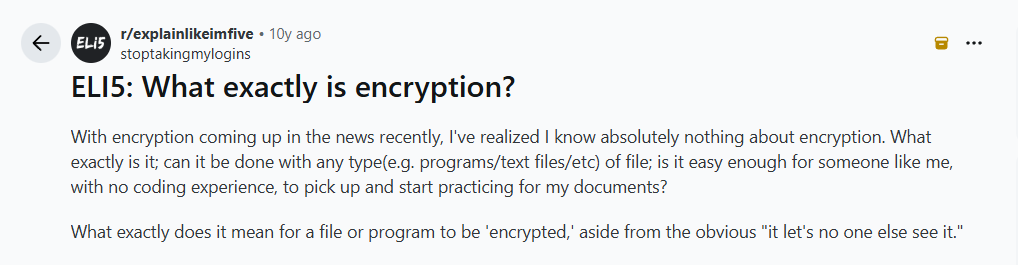
Let’s break it down in the simplest terms possible, explore why it’s the invisible shield protecting your digital life, and show you how to use it—even with zero coding experience.
Encryption Explained Like You’re Five
To answer the question of what is encryption? Someone must know that it is a way of scrambling information so that only someone with the right “key” can unscramble and read it. A fantastic analogy from a helpful Redditor paints the perfect picture:
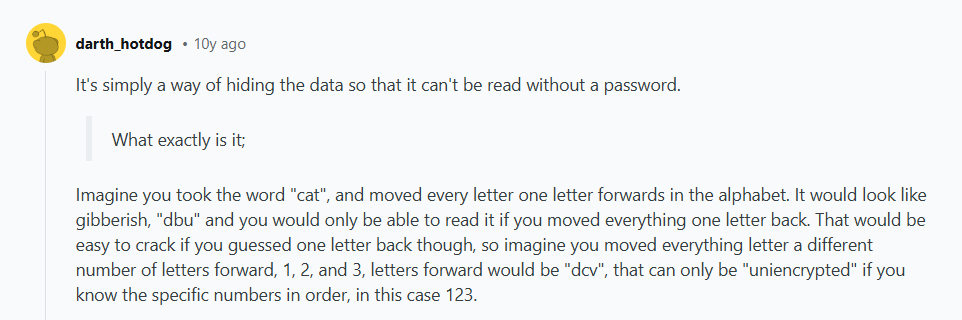
Think of it like a secret decoder ring from a childhood spy kit. You take a readable message (“cat”), apply a secret rule (“shift each letter forward by 1”), and it turns into gibberish (“dbu”). Only someone who knows the rule (“shift each letter back by 1”) can turn it back into “cat.”
Modern encryption is just a vastly more complex and secure version of this idea. Instead of shifting letters, it uses immensely complicated mathematical formulas—so complex that they can’t be cracked by guessing.
From Simple Codes to Digital Fortresses
While the letter-shifting analogy is great for understanding the concept of what is encryption, real-world encryption—the kind that secures your bank transactions, messages, and VPN connections—is on another level. As another commenter explained:
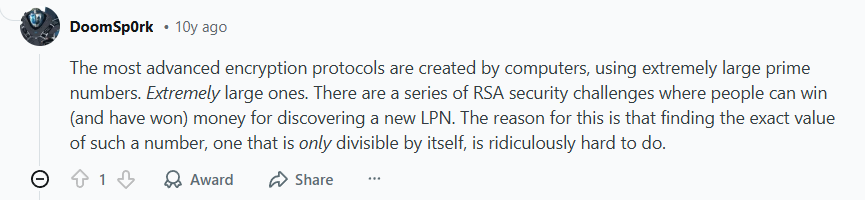
This is where it gets fascinating. Advanced encryption, like the RSA protocol mentioned, uses incredibly large prime numbers—numbers so huge that it would take even the most powerful supercomputers thousands of years to guess them through brute force. This mathematical complexity is what creates the “lock” that keeps your data safe from prying eyes.
Can You Encrypt Your Own Files? (Spoiler: Yes!)
Absolutely, even if you didn’t understand what is encryption. You don’t need to be a cryptographer or a programmer to use encryption. It’s built into the devices and software you use every day:
- File Encryption: Both Windows (BitLocker) and macOS (FileVault) have built-in tools to encrypt your entire hard drive.
- Document & Folder Encryption: You can password-protect ZIP files, PDFs, and Word documents with just a few clicks.
- Messaging Apps: Services like WhatsApp and Signal use “end-to-end encryption” by default, meaning your messages are scrambled before they leave your phone and only unscrambled on your friend’s device.
So yes, you can—and should—start practicing. Encrypting sensitive documents (like tax forms or personal IDs) on your computer is a great first step toward digital hygiene.
The Everyday Magic of Encryption: Where You See It in Action
Even if before you didn’t really understand what is encryption, you interact with encryption constantly, often without realizing it:
- The Little Padlock in Your Browser: When you see
https://and a padlock icon in your address bar, your connection to that website is encrypted. This is called SSL/TLS encryption, and it’s what stops hackers from stealing your credit card details during checkout. - Online Banking & Shopping: Every transaction is encrypted from your device to the bank’s server.
- Wi-Fi Networks: A WPA2 or WPA3 password on your home Wi-Fi means your wireless traffic is encrypted, preventing neighbors from snooping.
- Virtual Private Networks (VPNs): This is where encryption becomes powerful and personal for your entire internet connection.
VPNs: Encryption for Your Entire Internet Connection
This is the crucial link. While you can encrypt individual files or specific website connections, a VPN applies a layer of strong, continuous encryption to everything you do online, even if you don’t understand what is encryption.
Here’s how it works:
- When you activate a VPN, it creates a secure, encrypted “tunnel” between your device and a VPN server.
- All your internet traffic—every website visit, every message, every stream—travels through this tunnel.
- To anyone trying to intercept your data (like a hacker on public Wi-Fi or even your Internet Service Provider), this traffic looks like indecipherable gibberish.
In short, a VPN does the heavy lifting of encryption for you, automatically and continuously. It’s the easiest way to ensure that the principle of encryption, even if you don’t understand what is encryption—turning your valuable data into uncrackable code—protects your entire digital life, not just pieces of it.
Choosing a VPN with Strong Encryption
Not all encryption is created equal. When selecting a VPN, look for:
- Modern Protocols: WireGuard and OpenVPN are currently the gold standards for speed and security.
- AES-256 Encryption: This is the military-grade encryption standard used by governments and security experts worldwide.
- A No-Logs Policy: The best encryption in the world means little if the VPN provider keeps records of your activity.
Top VPNs Known for Robust Encryption:
- NordVPN: Uses next-gen WireGuard protocol (NordLynx) and AES-256 encryption.
- Surfshark: Implements strong encryption standards alongside user-friendly features.
- ProtonVPN: Developed by scientists from CERN, with a strong focus on transparent, high-grade security.
Your Takeaway: Encryption is For Everyone
You don’t need to understand prime number theory to benefit from encryption. Just know its core is about what is encryption, which is a simple concept made powerful by modern computing: turning your private information into a secret code.
By using encrypted messaging, browsing on https sites, and especially by using a VPN, you’re taking active control of your privacy. You’re deciding who gets to see your data and who doesn’t.
Start small. Enable encryption on your devices. Be mindful of the padlock icon. And when you’re ready to encrypt your entire online presence, let a trusted VPN do the work for you.
Ready to put an encryption shield around your internet connection? Explore how NordVPN implements cutting-edge encryption effortlessly, or check out Surfshark for powerful protection on all your devices. For those who value transparency in their security, ProtonVPN offers a principled approach.
Leave a Reply